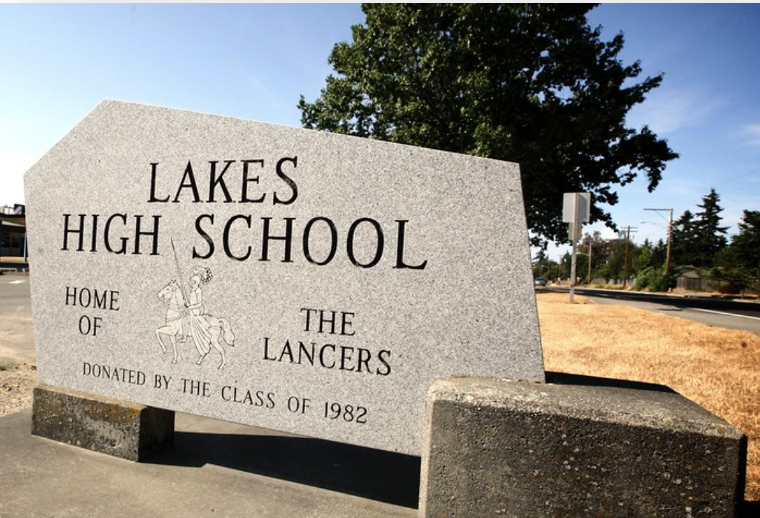
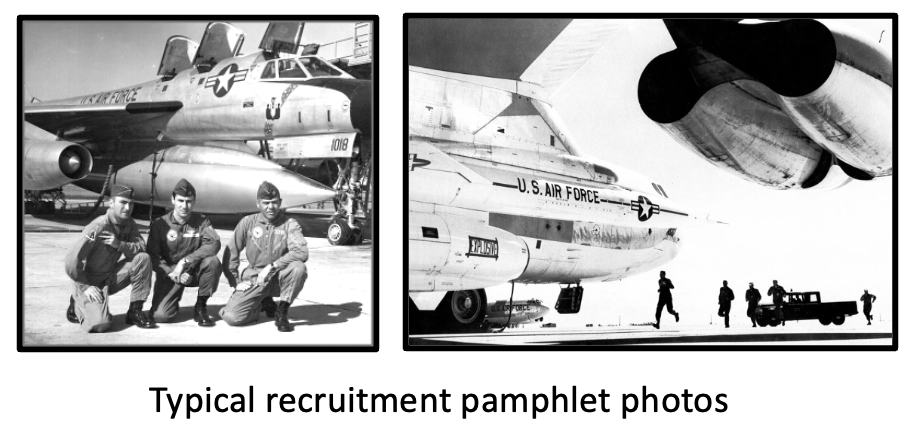
It was 1970, and I was a senior at Lakes High School in Lakewood, Washington.
At the time, I was pretty clueless about what came next. Graduation was approaching, but I had no real plan for my future. I hadn’t applied to any colleges, and I had given very little thought to what I might do for a career.
There was one thing I did know: I loved aviation. Airplanes had fascinated me for as long as I could remember. Yet, strangely enough, it had never occurred to me that my love of flying might actually become a career.
College didn’t seem like much of an option. I was the oldest of four kids, and my father simply couldn’t afford to send us to college. So, as graduation drew closer, I found myself facing the future with a love of airplanes—but no idea where that love might take me.
I was not yet a Christian, but looking back now, I can see how God was already at work, aligning circumstances that would eventually lead me to a wonderful career in what should have been an obvious field for me—AVIATION.
During my senior year, I was required to meet with the school counselor to talk about what I might do after graduation. While waiting in his outer office, I noticed a rotating rack filled with pamphlets. One of them caught my attention: The United States Air Force.
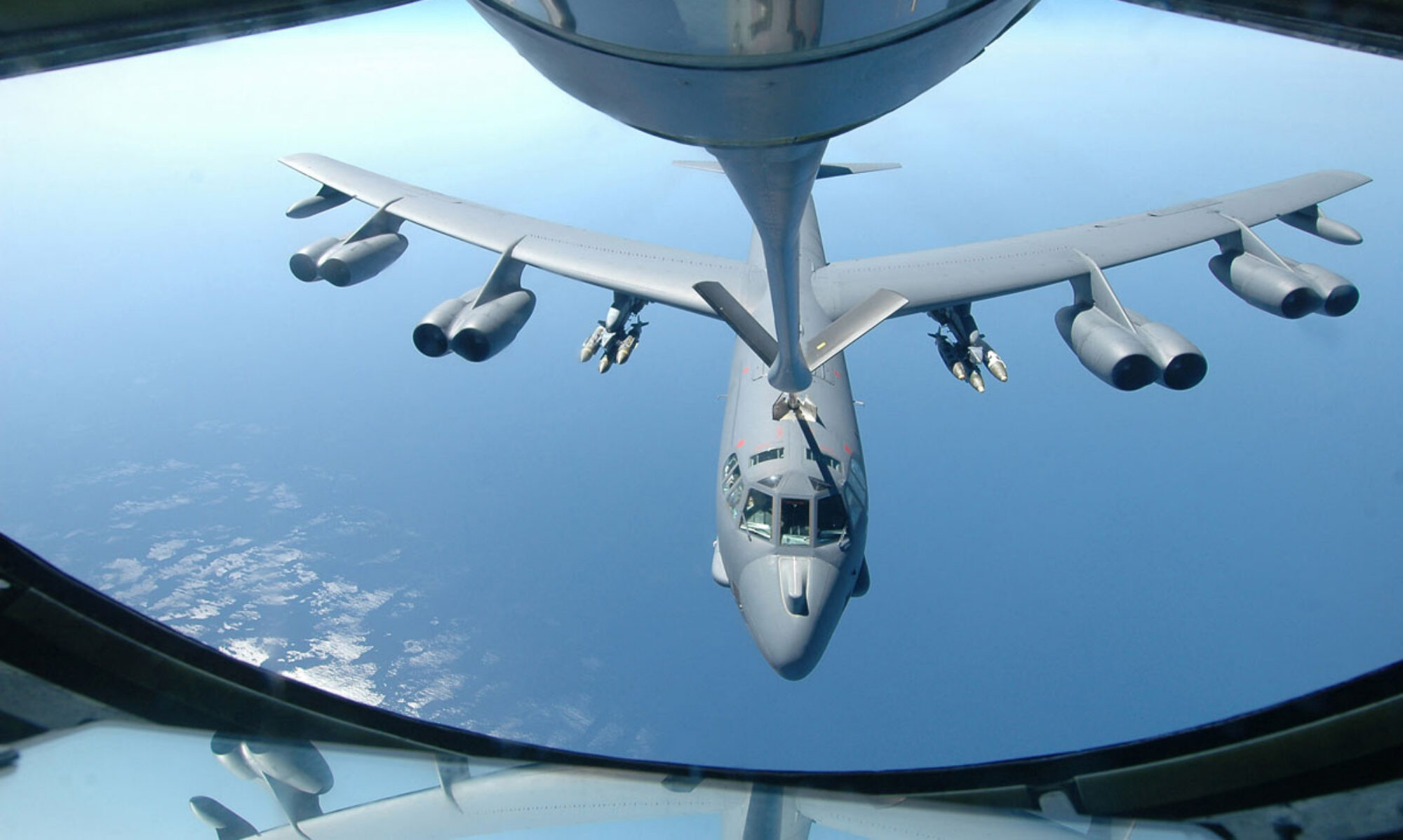
Perhaps it stood out because of my dad. He had served in the Air Force as an enlisted aerial gunner aboard the B-52. He retired as a Master Sergeant in 1966 with 20 years of service.
Whatever the reason, I picked up the pamphlet. It described an opportunity to become an Air Force officer through the Reserve Officer Training Corps (ROTC).
There are several paths to becoming a commissioned officer in the military. Some attend one of the service academies. ROTC allows students to attend a civilian college while completing military training and preparing to receive a commission upon graduation. Another route is officer training after earning a college degree.
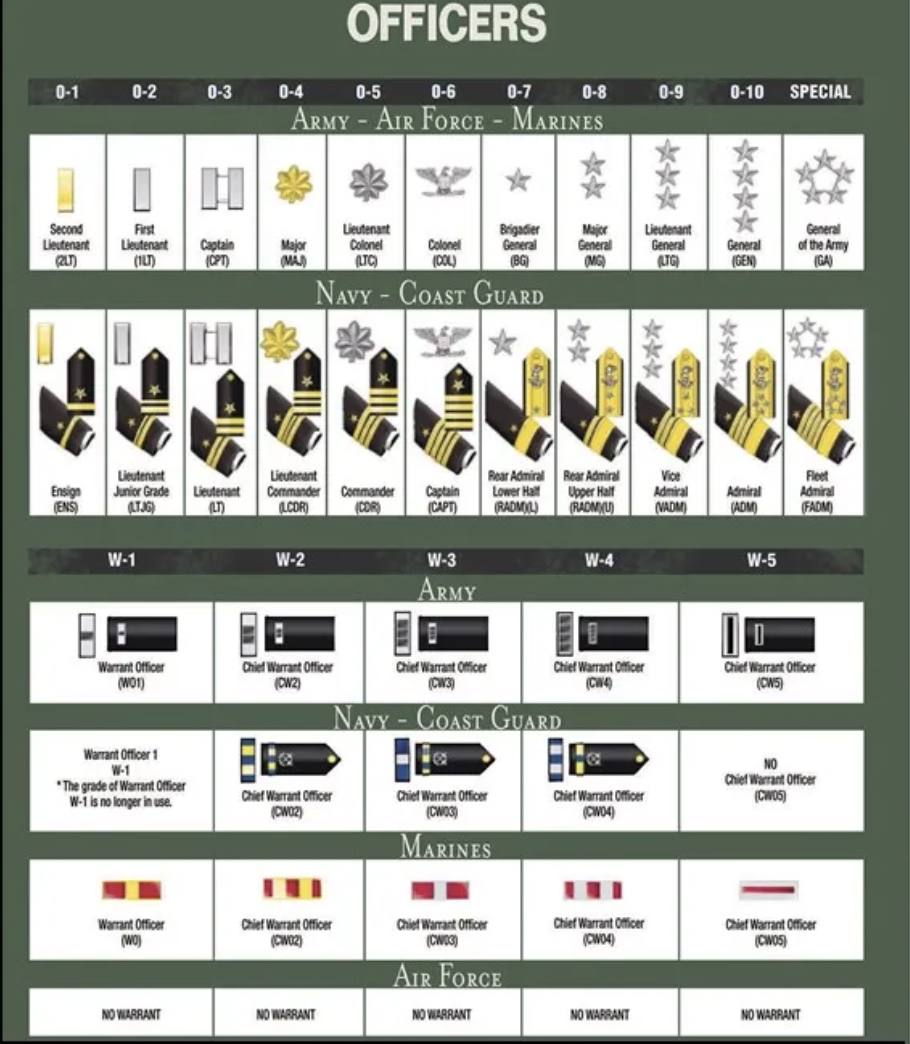
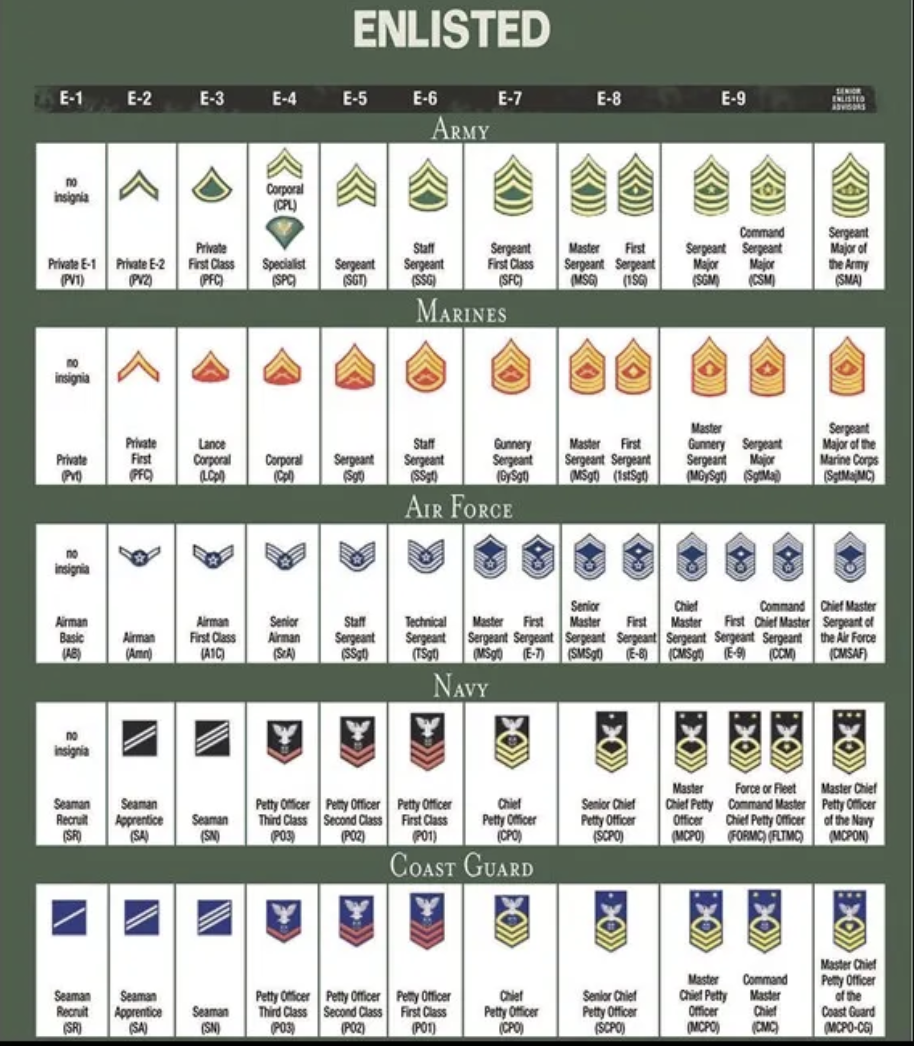
This is probably a good place to explain the basic military rank structure. The armed services have two broad categories of rank: enlisted personnel and commissioned officers, usually referred to simply as “officers.”
In the Air Force, commissioned officer ranks begin with Second Lieutenant, followed by First Lieutenant, Captain, Major, Lieutenant Colonel, and Colonel. Above Colonel are the general officer ranks—Brigadier General, Major General, Lieutenant General, and General, with General carrying four stars.
The graphic below shows how those Air Force officer ranks progress.
And there I was—a high school senior who hadn't even been thinking seriously about college or a career—holding a pamphlet that offered a path toward college, becoming an officer, and aviation.
At the time, it may have seemed like a coincidence.
Looking back, I don't believe it was.
Click to see a blog that defines the difference between officer and enlisted.
The other major group are the "Enlisted" men and women, also known as Non-Commissioned Officers or NCOs. Starting at the lowest rank of private, then moving up by promotion to more senior positions. Technically every Enlisted person is lower in rank than the first Air Force Officer rank of Second Lieutenant. See the graphic below to see the various ranks.
Click to see a blog that defines the difference between officer and enlisted.
Growing up as an “Air Force brat,” aviation was simply part of my world. My dad was an Air Force NCO (E-7) and an aviator, and I spent the first 15 years of my life living on or around Air Force bases.
As a kid, I would often ride my bicycle down to a spot where I could watch the runway. I never tired of seeing those enormous aircraft—the B-52 Stratofortress bombers and KC-135 Stratotankers, both Boeing aircraft—taxi into position, bring those powerful engines up, and then thunder down the runway. The noise, vibration, and tremendous thrust as they lifted into the air were unforgettable.
At other times, I would watch aircraft returning from their missions circle the field and fly the traffic pattern, sometimes practicing touch-and-go landings before finally touching down at the end of a long crew day. For a B-52 crew, that could mean returning from a mission that had lasted around 12 hours.
What made it even more fascinating was knowing that sometimes my dad was aboard one of those B-52s I was watching.
I would look up at those huge airplanes and wonder what it must be like to be part of the crew—to leave the ground, disappear into the distance, and return many hours later.
That life always appealed to me. Somewhere inside, I wondered what it would be like if someday I could fly airplanes, too.
As I studied the brochure, I saw black-and-white photographs of Air Force aircraft and smiling aviators—all men in those days—wearing flight suits and looking as though they had the best jobs in the world.
Then I remembered something my dad had once said. He had retired from the Air Force as a Master Sergeant and, like many career NCOs, occasionally had a few choice words about officers:
“Those damn officers. They make a load of money and don’t do anything.”
Hmmm.
That sounded intriguing. Who wouldn’t want to do THAT for a living?
I held onto the brochure as I went into the counselor’s office. During our conversation, I mentioned the possibility of becoming an Air Force officer. He looked through my folder, furrowed his brow, and then, without much emotion, delivered his assessment:
“I don’t believe you have the necessary IQ for that.”
I was stunned.
Then I was angry.
This man didn’t know me. He had no idea what I was capable of, and he certainly hadn’t offered any useful ideas about what I should do with my life. The entire meeting seemed like a waste of time.
Except for two things: that Air Force brochure—and his comment.
His words had an effect on me that I’m sure he never intended. Instead of discouraging me, they gave me something I hadn't had when I walked into his office: determination.
The meeting ended rather abruptly. I got up, walked out of his office, still angry, and silently said to myself:
“Challenge accepted!”
That evening, I filled out the form in the brochure and mailed it the next day. Fortunately, it was only January, so there was still time to apply for an ROTC scholarship.
About a week later, an actual letter arrived in the mail inviting me to take the Air Force Officer Qualifying Test (AFOQT) at nearby McChord Air Force Base.
Getting onto the base wasn't difficult in those days. Cars belonging to military families had military-issued stickers on the windshield, and the gate guards would often simply wave us through. So I drove to McChord in my dad’s car to take the test.
And that was something special in itself.
Dad letting me drive his car was an honor.
I had no way of knowing it then, but that little brochure—and a counselor who told me I wasn't smart enough—had just changed the direction of my life.
Dad's 1968 Ford Mustang
I showed up for the test along with about a dozen other young men. At that time, becoming an Air Force pilot was still exclusively a male opportunity. It would be another six years before the Air Force opened pilot training to women—and began discovering what should have been obvious: women could become excellent military pilots, too.
The AFOQT consisted of a battery of multiple-choice and fill-in-the-blank questions. Some questions seemed to appear more than once, only worded differently, presumably to test consistency as well as knowledge and reasoning.
Toward the end came the part that really caught my attention. We were shown illustrations of flight instruments and had to match their indications to pictures of airplanes in various attitudes. An airplane might be banking to the right, climbing, descending, or some combination of the three.
To me, that part seemed surprisingly straightforward.
I didn't understand why at the time. I knew nothing about different learning styles or the fact that people process information in different ways. I would eventually realize that I am very much a visual and hands-on learner.
That explained a lot about my years in school. I struggled in classes where learning consisted primarily of a teacher writing words on a blackboard or assigning page after page from a textbook with few illustrations. Give me something I could see, visualize, or physically work with, however, and it was a completely different story.
I did well in geometry because I could picture the angles and shapes in my mind. Biology made sense when I could actually see and touch what we were studying—even if that meant dissecting a frog.
And now, looking at those aircraft and flight instruments on the AFOQT, my brain seemed to understand almost instinctively what the airplane was doing.
There was a wonderful irony in all of this. Some of the same characteristics that had made traditional classroom learning difficult for me would eventually become tremendous strengths in the cockpit.
The kid whom a counselor had just suggested might not have the IQ to become an Air Force officer was discovering that his mind was particularly well suited to flying an airplane.
About a week later, another invitation arrived—this time for a medical examination. I figured that had to be a good sign. I hadn't received an AFOQT score that I remember, but if the Air Force wanted to examine me further, I assumed I must have done reasonably well.
Recall that in the 1970's there was no universal email, no World Wide Web, no affordable cell phones. Communication was through phone calls (with no voicemail) or written/typed letters.
The physical was thorough. There was bloodwork, a hearing test, the inevitable “turn your head and cough,” and a very detailed eye examination. I had never worn glasses, and the examiner told me I had 20/20 vision in my left eye and 20/15 in my right. He assured me that was very good. I later learned how important that was. At the time, applicants needed 20/20 vision in both eyes to enter Air Force pilot training.
I passed the medical and moved on to what appeared to be the final phase: an essay examination.
This part was different. We were given questions with an entire page on which to handwrite each answer, and we were allowed to take the exam home. I answered everything as thoughtfully and honestly as I could.
But one question stopped me cold:
“What leadership positions have you held?”
That one bothered me because, when I looked back over my life, there didn't seem to be much to write about.
I had started junior high in Grand Forks, North Dakota, where we rode a bus 17 miles from the Air Force base into town every day. I was fairly quiet, yet somehow I was popular. Even today, I'm not entirely sure why. Perhaps it was simply because I tried to be kind to everyone.
That ability to make friends was almost a survival skill for an Air Force brat. Every three or four years, Dad would receive another assignment, and we would move. New town. New school. New classmates. New friends. Then, just when you felt settled, it was time to start all over again.
At the end of eighth grade, something remarkable happened: my classmates at Schroeder Junior High elected me to be their ninth-grade class president.
I was thrilled.
For the first time, I began thinking seriously about what I could accomplish in a leadership position. I met with teachers, listened to their ideas, and started making plans for the coming school year. They encouraged me, and I was excited about what lay ahead.
Then summer arrived.
Dad retired from the Air Force.
And we moved to Tacoma, Washington.
There went my presidency.
Once again, I would have to start over—new school, new friends, new surroundings, even new weather and geography.
Sigh. Here we go again.
I attended Hudtloff Junior High for ninth grade. It was there that I first became aware of organized school sports, particularly wrestling and rugby, which fascinated me.
The following year, in 1967, I entered Lakes High School and participated in organized sports for the first time: cross-country, wrestling, and track. I didn't yet understand the value of joining school clubs and organizations, although I did become a member of the Letterman's Club.
I also joined something that was brand new at the time—our school's first computer club.
And somehow, I became its president.
So when I sat down to answer that leadership question, my résumé didn't exactly strike me as impressive. I explained that growing up in a military family meant constantly moving and starting over. I was often competing for leadership positions against students who had grown up together and had known one another for years. I was usually the new kid—the unknown kid.
I submitted the essays, but by then I had pretty much convinced myself that the scholarship wasn't going to happen.
So I began considering more realistic possibilities.
I was working at Piggly Wiggly as a stock boy and bagger. Maybe I could make a career there. If I worked hard, perhaps someday I could become an assistant manager. Play my cards right, and maybe eventually I could even become a store manager.
It wasn't flying airplanes, but it was a plan.
Then, in March 1970, just three months before high school graduation, a letter arrived from the Department of the Air Force.
Expecting the worst, I opened it and began reading.
Then I sat down.
And read it again.
I wanted to make absolutely certain I understood what it said.
I had been awarded a full college Air Force ROTC scholarship—with the opportunity to become a Second Lieutenant and enter pilot training in the United States Air Force.
I would attend a college offering Air Force ROTC, provided I could gain admission.
The kid who hadn't applied to college...
The kid whose family couldn't afford to send him...
The kid who had been told by his high school counselor that he probably didn't have the IQ to become an Air Force officer...
...was going to college on a full Air Force scholarship with the opportunity to become a pilot.
I wasn't yet a Christian, so I didn't understand it then the way I do today.
Looking back, I see God's hand all over it.
God had given me the desire of my heart.
Dad was delighted.
Apparently, that officer business wasn't such a bad idea after all.
And as for me?
I smiled a lot during those last three months of high school.
Even after receiving the scholarship, I remember wondering whether the Air Force knew what it was doing.
Had they made a mistake?
I certainly didn't think my essay had demonstrated any great leadership ability. Other than a few experiences, I simply hadn't been given many opportunities to lead in school. Moving every few years as an Air Force brat meant I was continually starting over, while many of the students around me had known one another since elementary school.
Years later, as I advanced in rank and eventually sat on various Air Force boards myself, I sometimes imagined the Major or Lieutenant Colonel who might have sat on the board reviewing my application.
Perhaps one of them understood.
Maybe they had children of their own and could imagine what it was like for a military kid who moved from school to school, repeatedly leaving behind friends, activities, and opportunities. Perhaps they looked beyond the relatively thin list of leadership positions and saw some potential that I couldn't yet see in myself.
I'll never know.
What I do know is that someone—or several someones—decided to give that 17-year-old kid from Lakes High School a chance.
And I praise God for putting those people in my path and for the extraordinary gift they gave me.
Now there was just one small problem.
I had an Air Force scholarship—but I still had to get accepted into college.
With my roughly 3.3 grade-point average, I began looking at colleges that offered Air Force ROTC. The scholarship was remarkably generous. It would pay my tuition and books, and even provide a $50 monthly stipend for spending money.
What it didn't cover was room and board.
That made staying at home the most practical option. Fortunately, there were two nearby colleges with Air Force ROTC programs that I could commute to: Pacific Lutheran University (PLU) and the University of Puget Sound (UPS).
There was an interesting irony in that choice. Both were private colleges with tuition that would normally have been far beyond what my family could afford.
But now the Air Force was willing to pay the tuition.
All I had to do was convince one of those colleges to let me in.
I applied to both schools, but the University of Puget Sound was the first to say yes. In early May, the acceptance letter arrived.
I was going to college.
That summer, I took a job doing hard physical labor on a construction site. The work was demanding, but the pay was good—good enough that I was able to save the money for something very important to me: a respectable diamond engagement ring.
Then came something that required a lot of courage for me.
I asked my beautiful high school sweetheart, Jody Andrews, to marry me.
She said yes!
Suddenly, the future that had seemed so uncertain only months earlier was taking shape. I had a full Air Force ROTC scholarship, a college that had accepted me, a path toward becoming an Air Force officer and pilot—and the young woman I loved had agreed to become my wife.
Ahead of me were four exciting years of college intertwined with military training and preparation for an Air Force career.
And eventually, there would be an airplane.
As part of my preparation for pilot training, I would get my first real taste of flying from the pilot's seat in a four-seat Cessna 172.
For the kid who used to ride his bicycle to the edge of an Air Force runway and wonder what it would be like to fly, the dream was about to become very real.
And that little Cessna would provide some stories of its own.