After two years in the ROTC program, the summer of 1972 brought my first real taste of military life not as a dependent. I reported to Fairchild Air Force Base, near Spokane, Washington, for six weeks of officer field training—our version of boot camp.
We even had our own version of drill sergeants, although ours were Air Force Captains (O-3) assigned to ROTC units. They could be every bit as intimidating as the drill instructors encountered in enlisted basic training. The days were demanding, highly structured, and deliberately stressful.
Like most military training, however, there was a purpose behind it. You learned discipline and teamwork, but you also discovered quite a bit about yourself—how you reacted under pressure, whether you could follow when necessary, and whether you could step forward and lead when it was your turn.
I survived the six weeks and returned home.
That fall, I began my junior year at the University of Puget Sound (UPS). I had made it through two years of college and ROTC, maintained a respectable GPA, and successfully completed summer field training.
Now came the part I had been waiting for.
It was time to learn how to fly.
Before anyone handed us the controls of an airplane, however, there was ground school. Our military instructors at UPS began teaching us the fundamentals of flight. We learned the basics of aerodynamics—lift, weight, thrust, and drag—and how those forces work together to make an airplane fly.
We studied weather, with particular emphasis on the conditions that could get a pilot into serious trouble: strong winds, icing, thunderstorms, poor visibility, and other hazards. We also began learning FAA rules and regulations and what would be required to earn a private pilot certificate.
Nobody came right out and said it, but we soon understood something else.
This was another filter.
The Air Force was continuing to evaluate us. Wanting to become a pilot was one thing. Demonstrating that you could actually learn to fly safely and competently was something else entirely.
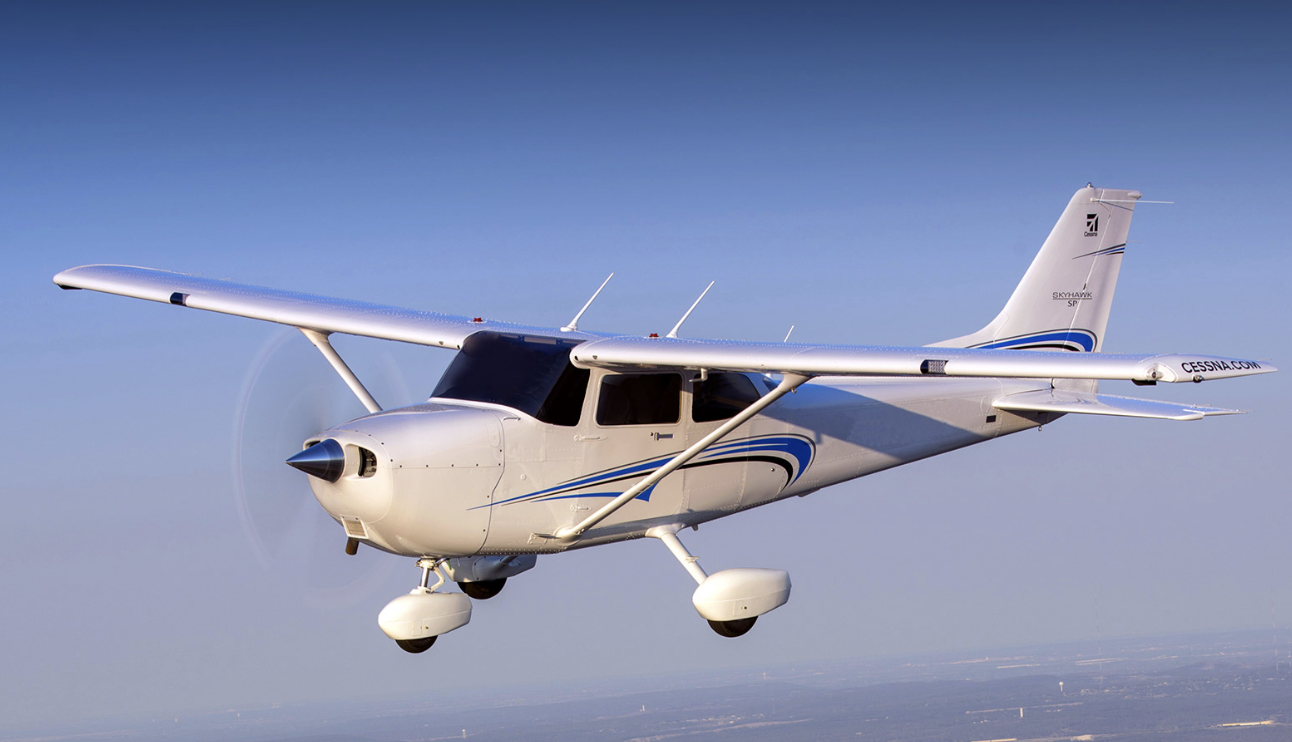
And the airplane the Air Force would use to find out was the Cessna 172.
The 172 was a simple, dependable four-seat airplane with a high wing and fixed landing gear. It wasn't pressurized, wasn't particularly fast, and certainly wasn't anything like the military jets I hoped to fly someday.
But none of that mattered to me.
After years of watching airplanes from the ground and wondering what it would be like to fly one, I was finally going to sit in the pilot's seat.
And that little Cessna was about to teach me lessons I would remember for the rest of my flying career.
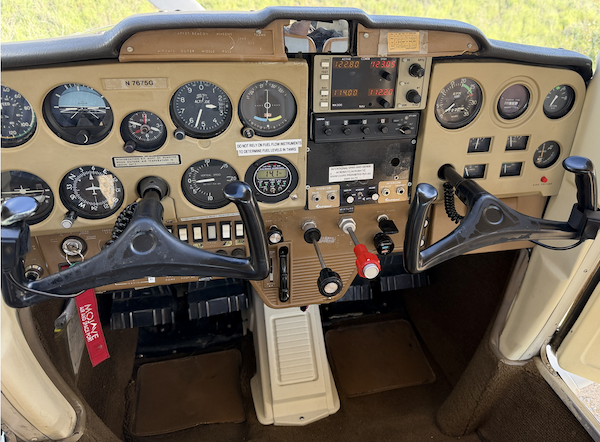
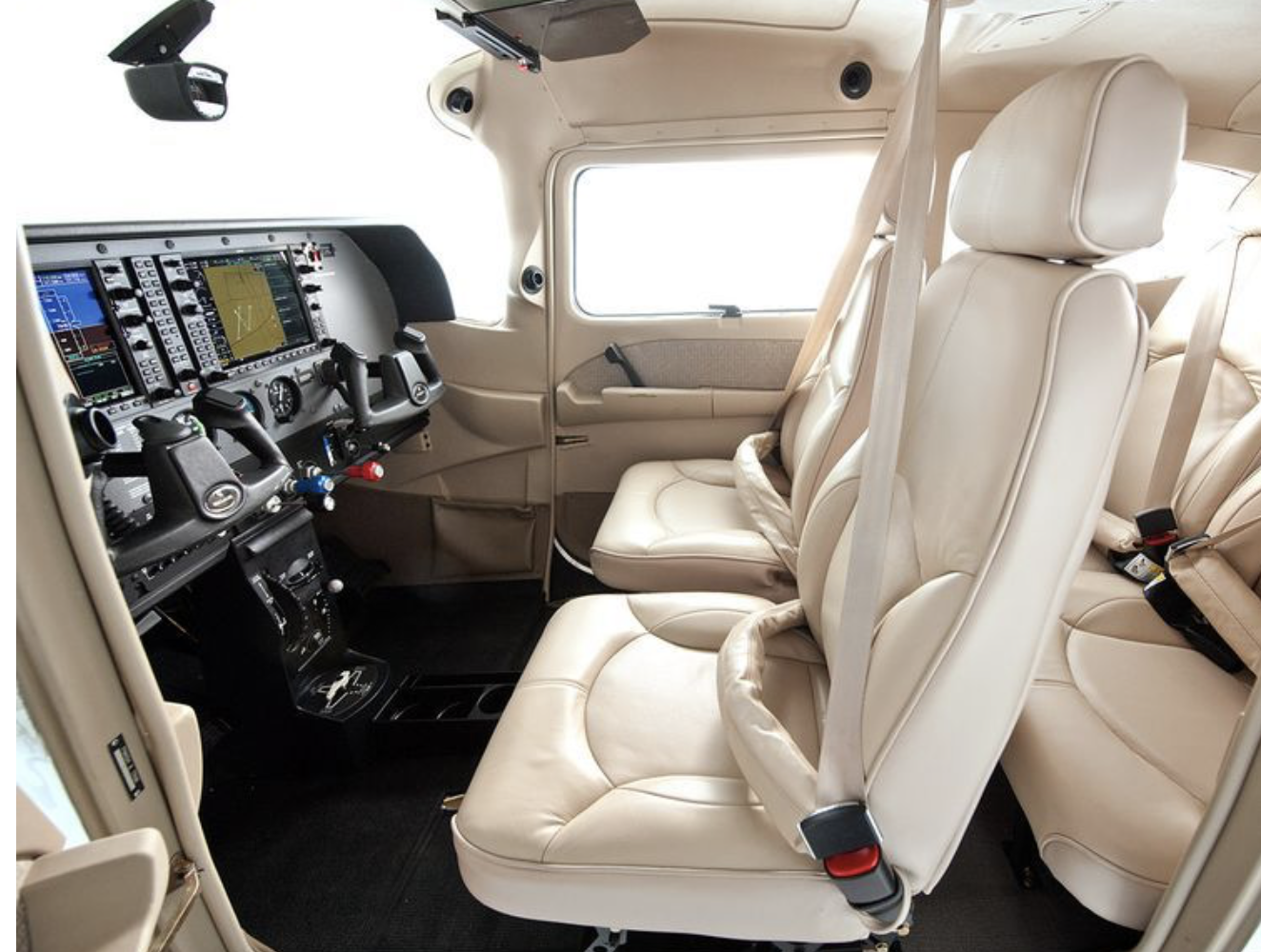
The student pilot sat in the left seat, with the instructor pilot—our IP—beside him in the right. There were two additional seats behind us, but they remained empty. Anyone who has spent time in a Cessna 172 knows there isn't a lot of extra room. With two people up front, charts, headsets, and everything else we needed, the cockpit could feel pretty cramped.
From the ground, flying looks almost effortless. Airplanes seem to glide smoothly through the sky, and if you've never actually been at the controls, it's easy to imagine that flying one must be fairly simple.
My first flight in the Cessna 172 quickly corrected that impression.
It was electrifying.
Unlike the big commercial airplanes I had flown in as a passenger, this little Cessna seemed alive. Every gust of wind moved it. Every control input produced an immediate response. It bounced, rolled, climbed, and descended in ways I had never experienced before.
And now I was the one with my hands on the controls.
That first flight was an unusual combination of fear and exhilaration. Part of me was thinking, What have I gotten myself into? Another part couldn't get enough of it.
Each training flight lasted about an hour and a half to two hours, and with every flight I became a little more comfortable and a little more confident.
But I knew one thing after that very first flight:
I wanted to do it again.
Flying wasn't just exciting.
It was addictive.
My Instructor Pilot—my IP—was a civilian flight instructor contracted by the ROTC program. He was a big man, every bit of 300 pounds, and sitting shoulder-to-shoulder with him in that tiny Cessna cockpit made things interesting. Whenever I reached for the throttle or other controls, I had to be careful not to jab him in the stomach.
Fortunately, he was also an extremely experienced pilot with a great sense of humor. He was patient, jovial, and knew how to make a nervous student feel comfortable. Along with teaching me how to fly, he passed along more than a few lessons about flying—and life—that I'm quite certain weren't included in the official curriculum.
Our first lessons weren't particularly glamorous. Before you can learn to fly an airplane, you have to learn how to operate one safely and methodically.
That meant learning to use a checklist for everything. We learned the proper procedures for preparing the airplane, starting the engine, taxiing, taking off, and eventually shutting everything down again.
We also had to learn how to talk on the radio. That meant communicating with Ground Control, the Tower, Departure Control, and finally Air Traffic Control (ATC) requesting permission to taxi and take off, and following their instructions as we entered and departed controlled airspace.
Once airborne, we would head out over Western Washington to practice the maneuvers required for our private pilot training—turns, climbs, descents, stalls, slow flight, and eventually takeoffs and landings.
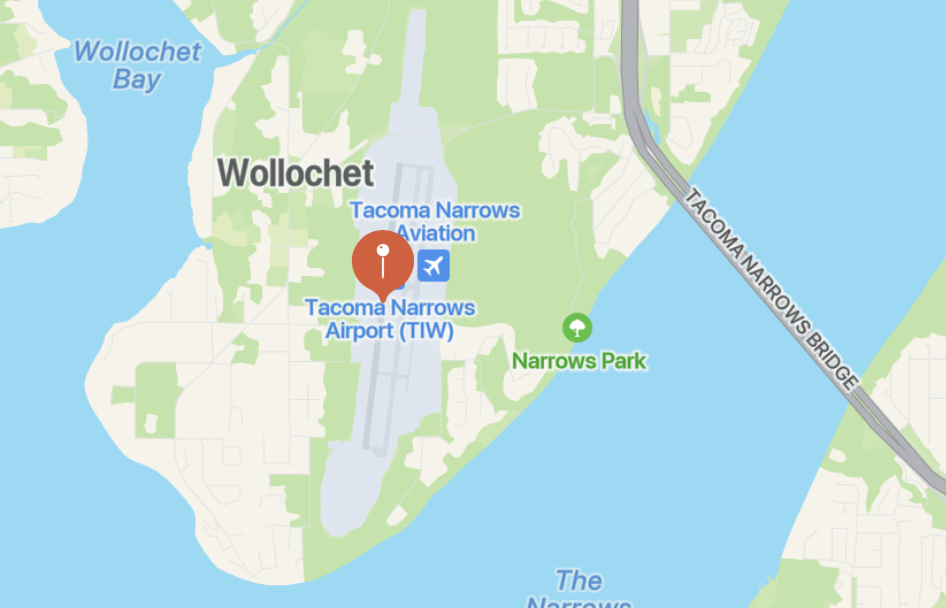
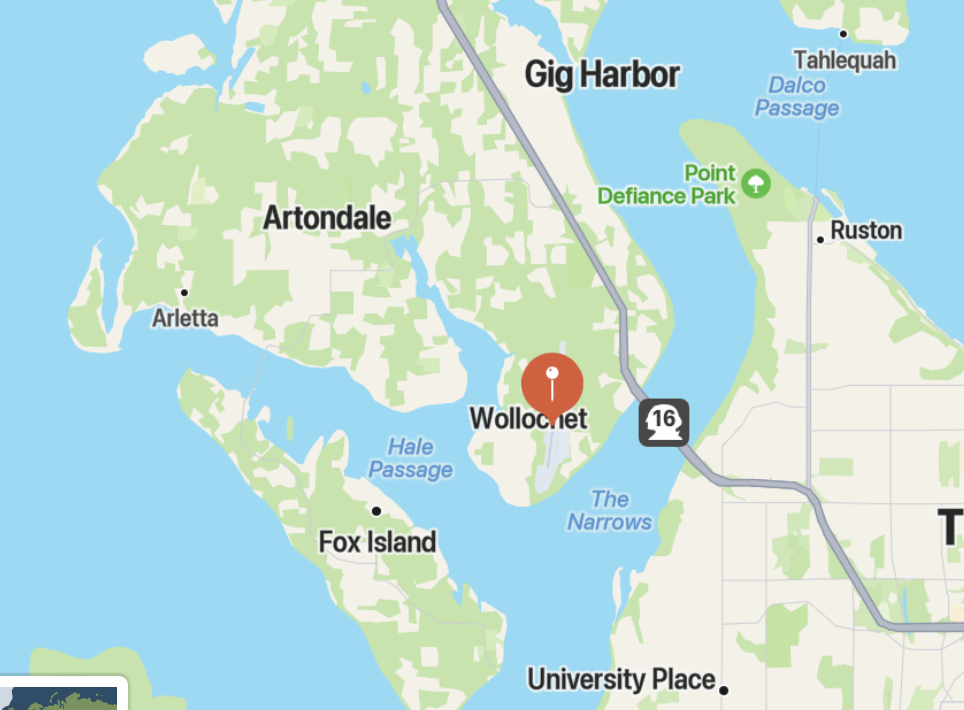
Our home field was Tacoma Industrial Airport, identified by the airport code TIW. Today, it is known as Tacoma Narrows Airport.
And from that little airport overlooking Puget Sound, I began learning the skills that would eventually take me into much larger—and much faster—airplanes.
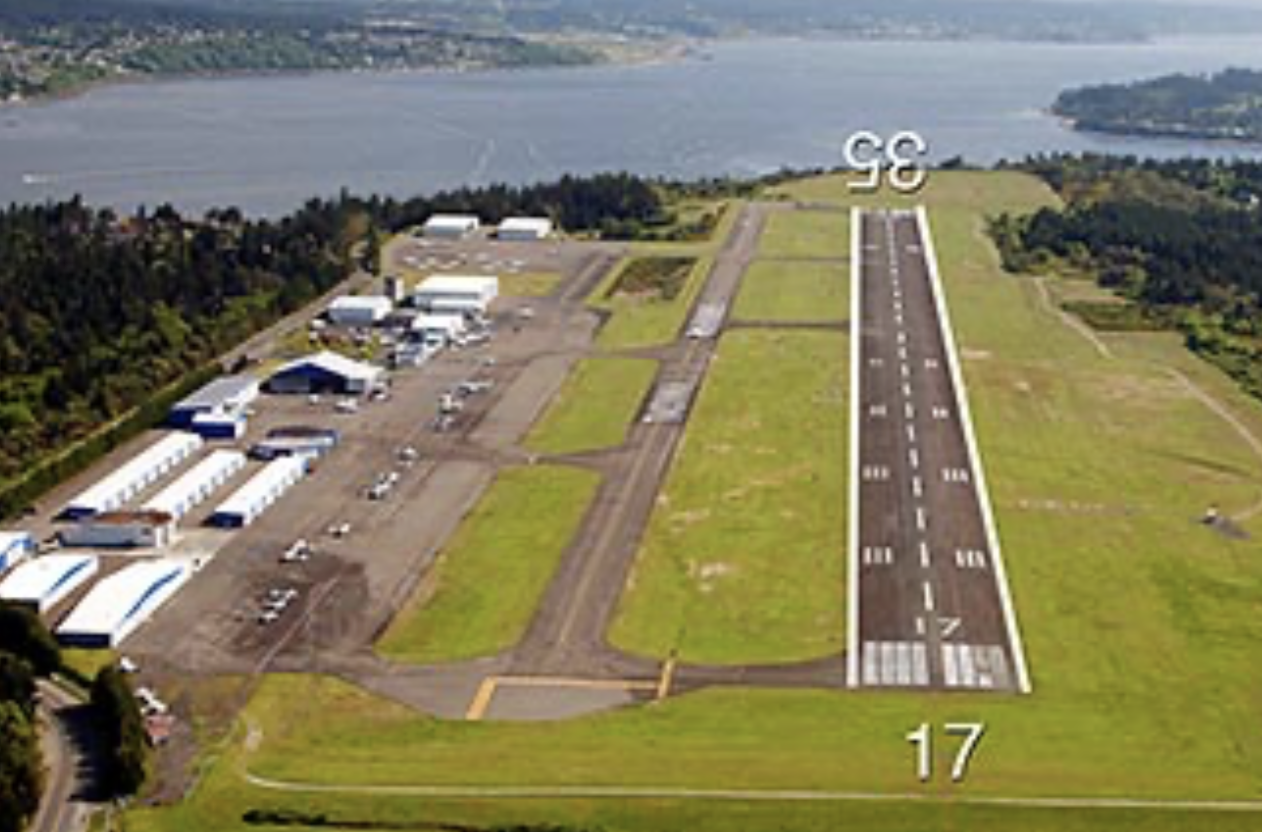
At Tacoma Industrial Airport, we almost always took off and landed to the south on Runway 17.
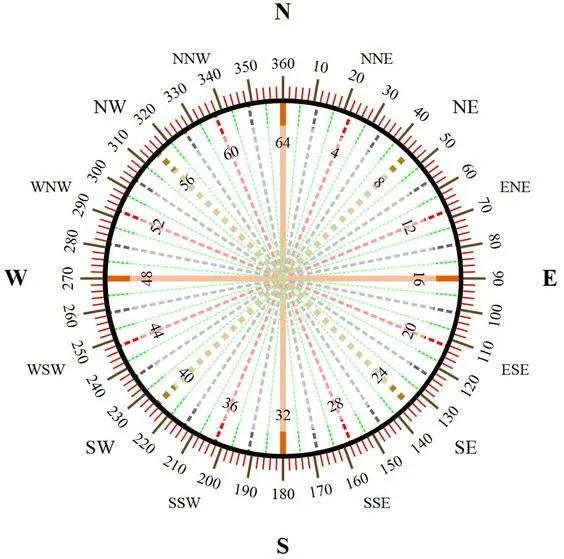
For those unfamiliar with runway numbers, there's a simple system behind them. A runway is numbered according to its approximate magnetic compass heading, rounded to the nearest 10 degrees, with the final zero dropped. So Runway 17 points approximately 170 degrees—just slightly east of due south, which is 180 degrees.
Every runway can, of course, be used in the opposite direction, and that end receives a number approximately 18 higher or lower, representing the 180-degree difference.
So if one end is:
Runway 17 = approximately 170°
the opposite end is:
170° + 180° = 350° = Runway 35
Since 360° (or 0°) is due north, Runway 35 points almost directly north.
It was a simple numbering system, but learning things like this was part of beginning to see an airport—and eventually the world—through the eyes of a pilot.
That meant that within a couple of minutes after takeoff, we were already out over the waters of Puget Sound.
All of my early flights were conducted under what the FAA calls Visual Flight Rules (VFR). In simple terms, that meant I had to maintain sufficient visibility and stay clear of clouds. At that stage of my training, I wasn't qualified to fly solely by reference to the cockpit instruments. I needed to be able to look outside and see where I was going.
Most of our training maneuvers were performed over the Artondale area, which in those days was largely forested with relatively few homes or populated areas below us. It was a good place to practice climbs, turns, stalls, and the other maneuvers required of a student pilot.
And there was another practical reason for choosing an area with lots of trees and not many people.
Just in case.
By the time I had accumulated about 20 hours, my instructor and I had developed a familiar routine. On this particular day, however, just before starting the engine, he looked over at me, smiled, patted me on the shoulder, and said:
“Keith, today you are going solo.”
Those words get a student pilot's attention.
A first solo is one of aviation's great rites of passage. It means your instructor has enough confidence in you to climb out of the airplane and trust you to take it up—and, more importantly, bring it safely back down—all by yourself.
It certainly didn't mean I knew everything about flying. Far from it. But I had demonstrated that I could handle the airplane, take off, fly the traffic pattern, maneuver safely, and land without someone sitting beside me to correct my mistakes.
I remember that first solo as both thrilling and a little unsettling. For the first time, that right seat was empty.
There was nobody there to save me from myself.
So I was cautious. I flew the airplane, followed everything I had been taught, and took a little time to enjoy a view of the world that relatively few people ever get to experience.
My instructor had once given me a bit of aviation wisdom that stayed with me throughout my flying career:
“There are old pilots, and there are bold pilots, but there are no old, bold pilots.”
That didn't mean flying couldn't be exciting. Almost every flight offered something memorable. It meant you didn't take foolish chances.
Flying can be remarkably unforgiving. A car with an engine failure rolls to the side of the road. A boat with an engine failure generally continues to float. An airplane with its only engine gone becomes a glider, and the pilot has only the altitude and time remaining to make some very important decisions.
After my first solo, it was time for the traditional celebration. There are several ways flight schools commemorate the occasion. One of the oldest traditions is cutting off the student's shirttail. Another is dumping a bucket of cold water over the new solo pilot.
Since I was wearing an ordinary T-shirt that day, they chose the water.
I couldn't stop smiling.
After about four flights in the local training area, we began venturing to other nearby airports. This introduced me to different traffic patterns and altitudes, more radio communications, and procedures at uncontrolled airports. Each flight added another layer to the skills I would need to become a licensed pilot.
This was called cross-country flying—which in aviation doesn't necessarily mean flying across the country. It simply means flying beyond the local area and navigating to another airport.
We flew north toward places such as Bellingham and south toward Vancouver, Washington. We generally avoided going east across the Cascades. The terrain presented additional challenges, including higher altitudes where oxygen requirements and aircraft performance became considerations.
Then came night flying.
I loved it.
At night, the natural horizon can become difficult or impossible to see, so you have to pay much more attention to the flight instruments to maintain the airplane's attitude. Yet night flying also had a peaceful quality. The air was often smoother after sunset, and the mixture of city lights, highways, airports, and small communities glowing below was spectacular.
But the lesson that accompanied nearly every phase of training was unmistakable:
Flying involves risk every time you leave the ground.
My instructor found plenty of ways to make sure I understood that.
One night, we were flying at about 6,500 feet over the forested Olympic Peninsula. Below us was almost complete darkness.
Without warning, my instructor reached over and pulled the throttle back to idle.
The engine was still running, but at idle it simulated the loss of engine power.
Then he looked at me and said:
“You just lost your engine. What are you going to do?”
I looked outside.
Blackness.
Forest below us.
No nearby airport. No obvious clearing. Not even a shoreline, which would have been one of my preferred options.
I considered the situation and gave him the most truthful answer I could:
“I have no idea.”
That, of course, was exactly why he had created the situation.
He began talking me through it.
First, establish the airplane at its proper gliding airspeed. Then select the best landing area you can identify—even if you can't actually see much of it. Rather than wandering around until altitude disappears, create some order out of the emergency. Position the airplane as though you were flying a normal traffic pattern toward an imaginary runway below: plan your turns, manage your altitude, and line yourself up for the best possible final approach.
His point was simple.
If the worst happens, don't panic. Fly the airplane.
You may not be able to control what caused the emergency.
But until that airplane reaches the ground, you can still control what you do next.
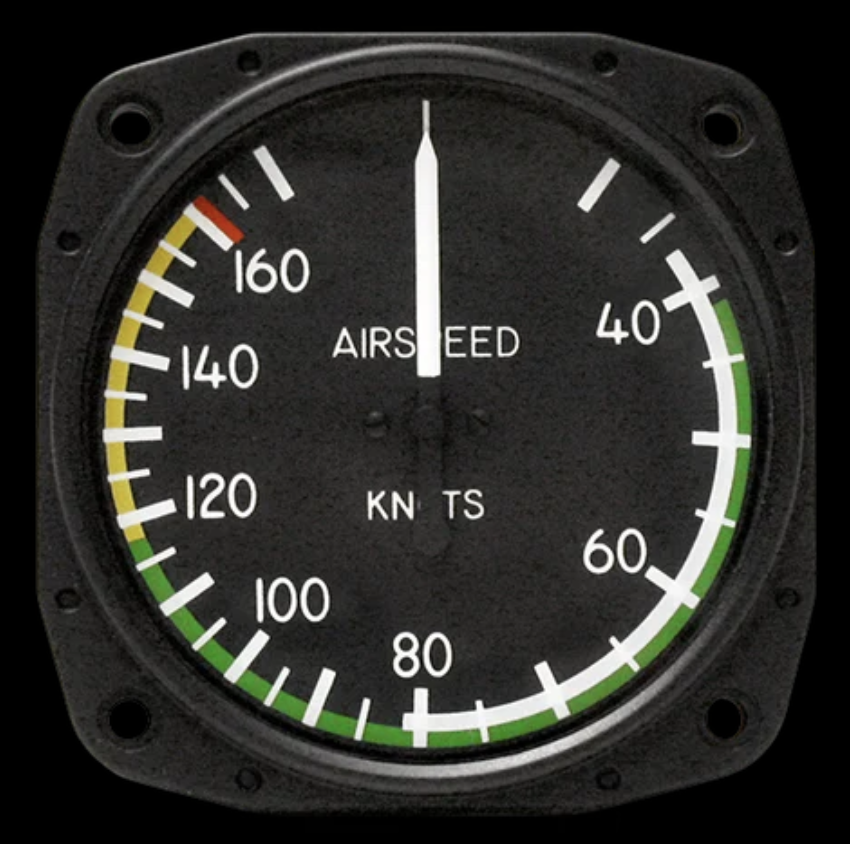
The white band is your friend if you lose the engine.
As we continued descending toward our imaginary runway, my instructor calmly added one final instruction:
“As you roll out on final approach, turn on your landing lights.”
I looked down into the darkness and asked the obvious question:
“But what if the lights come on and there are nothing but trees in front of me?”
Without missing a beat, he replied:
“Then turn off the lights.”
Behind the humor was a serious lesson about aviation—and about life. A pilot can train, prepare, follow procedures, and use every bit of skill and judgment he possesses. When trouble comes, you keep your head, fly the airplane, and do everything within your power to produce the best possible outcome.
But there comes a point when you've done all you can do.
I wasn't yet mature in my Christian faith, but looking back today, I understand that life lesson from a spiritual perspective.
We use the abilities and biblical knowledge God has given us, make the best decisions we can, and do everything we can. Then recognize that ultimately, the outcome rests in God's hands and we can have peace about whatever happens.